


Wrong Way Vehicle Detection System (WWVDS)
Wrong-way vehicle detection systems reduce high-risk, high-impact crashes by identifying wrong-way entries, alerting drivers in real time, and notifying agencies to respond quickly.
GovComm’s best-in-class Wrong Way Vehicle Detection Systems (WWVDS) are installed on exit highway ramps and are designed to warn drivers and notify local traffic management centers and law enforcement when a vehicle attempts to enter a highway on an exit ramp.
How does GovComm’s WWVDS work?
Our systems utilize Detection OptimizerTM Logic to accurately and promptly confirm actual wrong-way events, thereby eliminating false alerts and making GovComm the gold standard for public safety and transportation authorities.
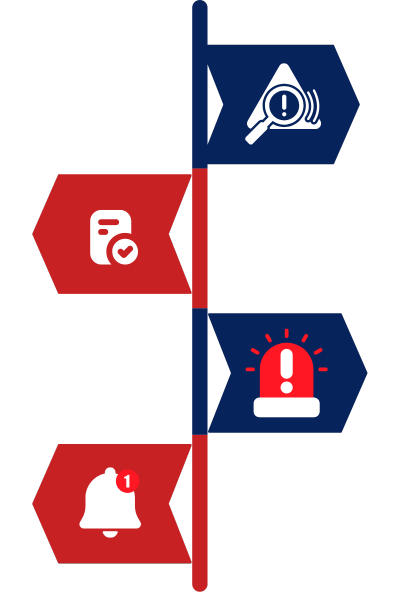
Confirm
An AI computer module installed in the cabinet validates the images to minimize false alerts.
Notify
If the driver does not course-correct, images, timestamps, and metadata are sent instantly to the traffic management center.
Detect
Thermal and optical bi-spectrum cameras identify vehicle movement in the wrong direction.
Alert
LED-enhanced wrong-way signs activate to alert the driver.
Detect
Thermal and optical bi-spectrum cameras identify vehicle movement in the wrong direction.
Confirm
An AI computer module installed in the cabinet validates the images to minimize false alerts.
Alert
LED-enhanced wrong-way signs activate to alert the driver.
Notify
If the driver does not course-correct, images, timestamps, and metadata are sent instantly to the traffic management center.
Why choose GovComm?
In multiple state tests, university studies, and field deployments, GovComm’s WWVDS has been proven to perform exceptionally in all aspects of wrong-way driving detection. Our 99.9 percent detection rate, flawless false positive handling, warning sign activation and Traffic Management System alerts promote self-correction and save lives.
Dual detection technology using optical and thermal sensors
AI engine for recognition and classification
Fully customizable systems
What causes wrong-way driving?
| Cause | Description | Notable stats |
|---|---|---|
| Alcohol impairment | Impairs judgment, reaction time, and coordination, significantly increasing wrong-way risk. | ~60% of wrong-way crashes involve alcohol-impaired drivers. |
| Older or younger age | Older drivers may have cognitive/visual impairments; young adults show higher risk-taking behavior. | ~70% of wrong-way drivers are male; solo drivers more at risk. |
| Distracted driving | Phone use, eating, or other distractions reduce awareness and response time. | 3,308 distraction-related deaths in 2022 (NHTSA). |
| Road design | Poor signage, unclear ramp design, and lack of markings contribute to driver disorientation. | Ineffective signage is a key contributor to entry errors. |
Wrong-way crashes remain a significant safety concern
According to the FHWA, a wrong-way driving crash is defined as one in which a vehicle traveling in a direction opposing the legal flow of traffic on a high-speed divided highway or access ramp collides with a vehicle traveling on the same roadway in the proper direction.
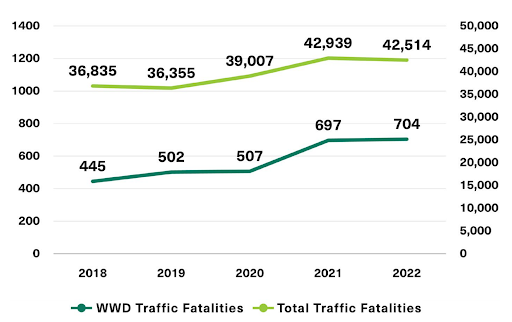
In the United States, between 2018 and 2022, a total of 2,855 people lost their lives – an average of 570 deaths each year in wrong-way crashes on divided highways.
Wrong-way detection technology: A proven solution
Florida DOT’s systemic deployment of wrong-way detection systems has helped prevent over 95% of potential wrong-way crashes, using real-time alerts, law enforcement coordination, and visual deterrents.
GovComm’s WWVDS is approved and listed on Florida’s Approved Product List and deployed across high-risk freeway exit ramps.
Hardware components
Processing & Detection
AI Computer Module
On-site processing for all detection systems, including wrong-way events.
- Nvidia edge processor installed in the cabinet
- Analyzes camera and sensor data in real time
- Reduces the number of false positives
- Triggers alerts and system responses instantly
Bi-Spectrum Camera
Core imaging tool for wrong-way vehicle detection and confirmation.
- Combines thermal and high-definition optical imaging
- Detects vehicles in low-light or adverse weather conditions
- Used for both detection and confirmation views
LiDAR Sensor
Traffic flow monitoring and wrong-way verification.
- Uses laser pulses to measure distance, speed, and volume of vehicles
- Enables real-time traffic analysis and wrong-way detection
Signage / Deployment Options
LED-Enhanced Wrong-Way Sign
Visual alert system to warn drivers immediately upon wrong-way entry.
- Equipped with 8 variable-intensity red LED
- Activates automatically when a wrong-way event is detected
- Visible to wrong-way drivers only
- Power options: AC, DC, or solar
Recessed Plate Configuration
For WWVDS deployment inside an ITS cabinet
- Mounts inside standard roadside ITS cabinet
- Typically installed near highway exit ramps
Aluminum Enclosure
Compact, pole-mounted WWVDS deployment where cabinet access is limited.
- Pole-mounted, weatherproof housing for full system deployment
- Includes space for power converters and communication modules
Software components
System Monitoring / Interface
Compass™ Monitoring Platform
Multi-site management and diagnostics for DOT and traffic management center personnel.
- Browser-based system dashboard for monitoring multiple sites
- Displays system health, active alerts, and historical event logs
- Allows remote configuration of all hardware components
WWVDS User Interface (UI)
Single-site monitoring and management for field operators.
- Dedicated software for individual system access
- Shows live views from both thermal and optical feeds
- Provides system info, location data, and test mode controls
- Captures and timestamps detection events for review
Why transportation leaders turn to GovComm
GovComm ITS equipment has performed well for us. They deliver as promised and their
customer service is superb.
Rafel Casasus Senior VP and COO at SICE, Inc.

Bruce Boyd, Director at Precision Contracting Services

My staff and I have been working with GovComm for many years. Their equipment performs
well and customer service is exceptional.
Nicolas Garcia - Eland Deputy PM / Express Lanes Supervisor

Customer support and customization
Our team works closely with city planners, traffic engineers, and community leaders to understand specific needs and make our solutions accordingly. From installation to ongoing support, GovComm ensures you get the most out of our technology.
Need assistance?
Contact GovComm for unmatched support and specific solutions.